|
Powder Coating
Powder coating was developed in the 1950's. For the next 30 years there were still only a few sources for powder coating, and it was available in just a few basic colors. It was the early 80's when powder gained wide-spread acceptance as an alternative to liquid painting. Today, advances in the polymers used in the manufacturing process have given powder coating superior durability to liquid paint. Additionally, the powder coating process is environmentally friendly, as there is no release of VOCs (volatile organic compounds) like conventional solvent-based liquid coating methods. The coating material begins as organic resins and pigments in solid form -- this solid is then ground to a fine dust (in your hand the powder coat material looks exactly like colored baby powder).
Parts to be coated must be clean and dry metal. Sandblasting is the most common method used for preparation. Some operations may use a chemical pre-treating process. To enhance the appearance of a finished part, grinding or sanding may be necessary.
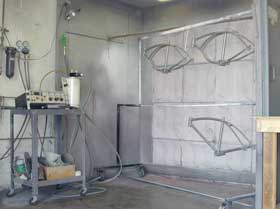
The powder is equally applied by a spray gun that electrostatically charges the powder as it exits the tip. The part being coated is electrically grounded. Because opposite charges attract, the charged particles of powder will cling to the part. After coating, parts are placed in an oven for curing, remaining there until the part reaches 400 degrees Fahrenheit (the thicker the metal, the longer the curing time). At 400 degrees, the powder will melt, flow and fuse over the surface of the object without drips, runs or sags. The result is a highly-durable and attractive finish.
Powder coating is a popular option in applications where a high resistance to chemical and environmental degradation is necessary. Powder coating is used widely on industrial and farm implements, as well as on bicycle, marine and automotive equipment. Even household furnishings and appliances are refinished in powder today. In fact, powder coating is the most cost-effective way to enhance and protect many kinds of materials. It will outlast countless liquid paint applications from a can or spray gun. Powder will cost more than do-it-yourself painting, but professional powder will not chip, fade, rust or compromise the base material.
|